Description
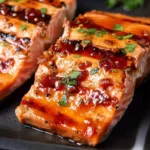
A simple and flavorful baked sockeye salmon recipe featuring a tangy balsamic glaze with Asian-inspired notes, perfect for a quick and healthy dinner.
Ingredients
- 1.5 lb sockeye salmon fillet (or 4-6 individual fillets)
- 1/4 cup balsamic vinegar
- 1/4 cup low-sodium soy sauce (or tamari for gluten-free)
- 1 tbsp brown sugar
- 2 tsp grated fresh ginger
- 1 tsp minced garlic
- 1 tsp sesame oil
- 1 tsp smoked paprika
- 1/2 tsp crushed red pepper flakes (optional)
- Salt and freshly ground black pepper, to taste
- 1/4 cup thinly sliced green onions or minced fresh parsley, for garnish
Instructions
- Allow the salmon to come to room temperature for 15-20 minutes before cooking for more even results. Meanwhile, preheat your oven to 400°F (200°C) and line a baking sheet with foil or parchment paper.
- In a small saucepan, whisk together the balsamic vinegar, soy sauce, brown sugar, grated ginger, minced garlic, sesame oil, smoked paprika, and crushed red pepper flakes (if using). Bring this mixture to a boil over medium heat.
- Reduce the heat to low and simmer until the glaze thickens slightly and is bubbling gently around the edges. Divide this glaze evenly into two separate small bowls.
- Pat the salmon fillet dry with paper towels and place it skin-side down on the prepared baking sheet. Season with salt and pepper.
- Generously brush one portion of the thickened glaze over the salmon. Discard any remaining glaze from that bowl.
- Bake for 8-10 minutes, or until the salmon is nearly cooked through (internal temperature around 120°F/49°C).
- Remove the salmon from the oven, then brush with the second reserved bowl of glaze. Return to the oven for another 2-4 minutes, or until the salmon is fully cooked (internal temperature 145°F/63°C) and the glaze is lightly caramelized.
- Let the salmon rest for a few minutes before garnishing with sliced green onions or fresh parsley and serving.
Notes
- For gluten-free option, use tamari instead of soy sauce.
- Adjust red pepper flakes for desired spice level.
- Internal temperature is key to avoid overcooking the salmon.