


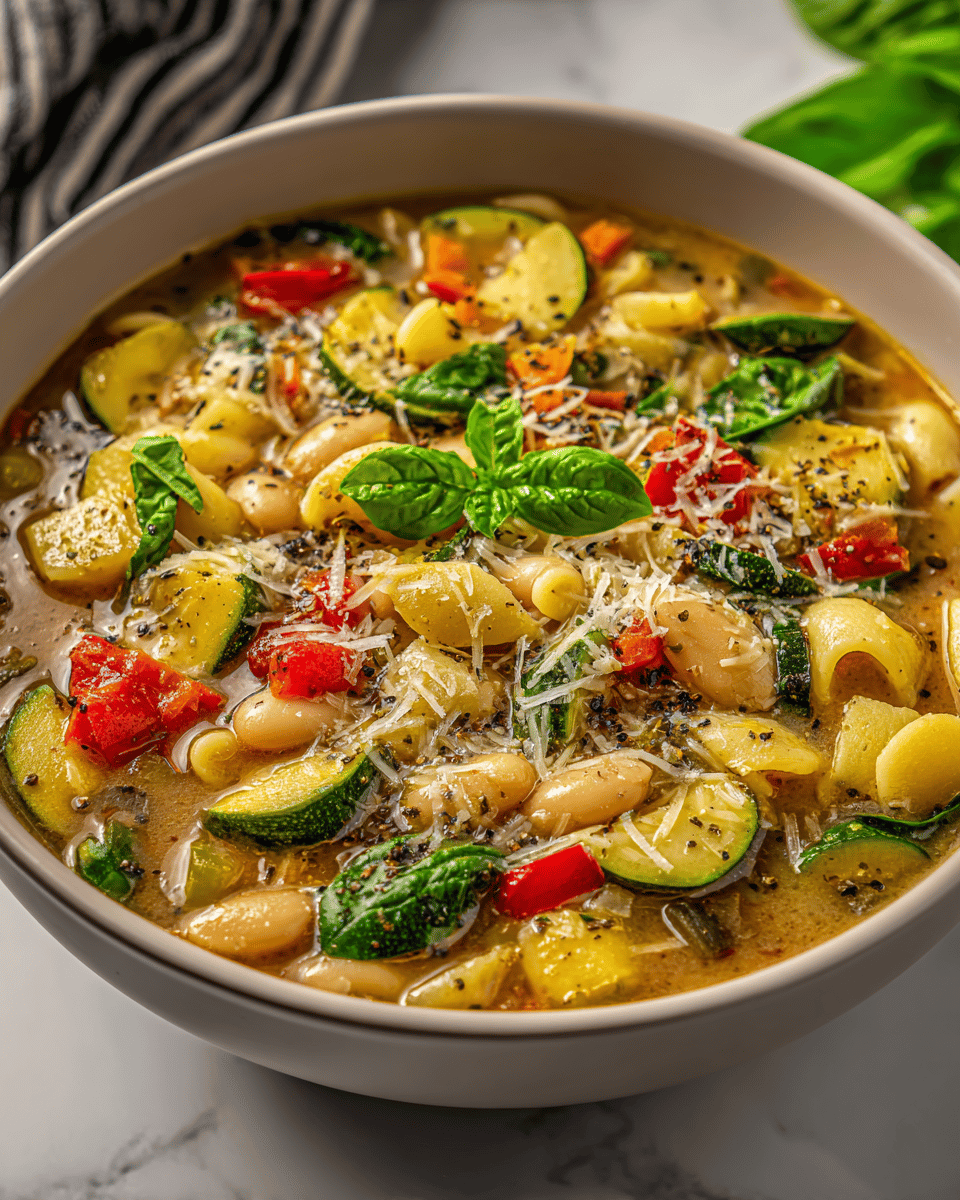
The gentle simmer of Spring Minestrone Soup fills the kitchen with an earthy aroma of fresh vegetables and herbs, evoking the first hints of warmer days. This light take on the classic Italian soup combines tender carrots, crisp zucchini, and creamy cannellini beans in a broth that’s both nourishing and brightened by a squeeze of lemon. It is the perfect way to celebrate seasonal produce without heavy ingredients.
I often turn to this recipe on busy weeknights when I want something comforting yet quick to prepare. It reheats beautifully for lunches, staying vibrant for up to three days in the fridge. Family members appreciate the hearty pasta and customizable garnishes that make each bowl feel special.

Why We Love This Recipe
- Light and Fresh: This Spring Minestrone Soup highlights seasonal veggies for a vibrant, guilt-free meal that’s ready in under 40 minutes.
- Family Friendly: The mix of pasta and beans provides satisfying texture and nutrition, appealing to kids and adults alike.
- Versatile Comfort: Easily adapt it to vegan by skipping cheese, while the lemon adds a zesty twist to traditional minestrone.
- Make-Ahead Ease: Components like pre-cooked pasta keep it simple for busy schedules without sacrificing flavor.

Fresh Spring Minestrone Soup
- Prep Time: 15 minutes
- Cook Time: 25 minutes
- Total Time: 40 minutes
- Yield: 6 servings
- Category: Soup
- Method: Stovetop
- Cuisine: Italian
- Diet: Vegetarian
Description
A fresh and light spring version of minestrone soup packed with seasonal vegetables, beans, and pasta for a comforting yet vibrant meal.
Ingredients
- 2 tablespoons olive oil
- 1 small yellow onion, diced
- 2 medium carrots, diced
- 2 stalks celery, diced
- 2 cloves garlic, minced
- 6 cups vegetable broth
- 15 ounces cannellini beans, rinsed and drained
- 1 cup small pasta (e.g., ditalini, baby shells)
- 1 medium zucchini, diced
- 1 cup frozen peas
- 1 cup baby spinach
- 1 tablespoon fresh lemon juice
- 2 tablespoons fresh basil, chiffonaded
- Salt and pepper to taste
- Grated Parmesan cheese, for garnish
Instructions
- Bring a pot of salted water to a boil. Add the pasta and cook for one minute less than the package instructions indicate to keep it al dente; then drain and rinse with cold water to stop the cooking process. Set aside.
- In a large soup pot or Dutch oven, warm the olive oil over medium heat. Add the diced onion, carrots, and celery, sautéing until they begin to soften, approximately 5-7 minutes.
- Stir in the minced garlic and cook for about 1 minute until fragrant.
- Pour in the vegetable broth and bring the mixture to a gentle simmer. Cover and let it cook for about 10 minutes to allow the flavors to meld.
- Introduce the drained cannellini beans, diced zucchini, and frozen peas to the simmering soup. Continue to cook for another 2-3 minutes, just until the vegetables are tender-crisp.
- Add the baby spinach and stir until it completely wilts, which should take about 1 minute.
- Remove the soup from the heat. Stir in the fresh lemon juice and the chiffonaded basil.
- Finally, add the pre-cooked pasta to the soup. Taste and adjust seasoning with salt and pepper as needed.
- Serve hot, garnished with a generous sprinkle of grated Parmesan cheese.
Notes
- This recipe can be made vegan by omitting the Parmesan cheese garnish.
- For best flavor, use fresh spring vegetables when in season.
- The pasta is cooked separately to prevent it from becoming too soft in the soup.
Ingredients to make Spring Minestrone Soup
These ingredients come together for a balanced, flavorful soup where fresh spring vegetables shine against the creamy beans and pasta. Opting for high-quality broth and seasonal produce elevates the natural sweetness and earthiness.
- Olive oil – provides a smooth base for sautéing the aromatics without overpowering the fresh flavors.
- Yellow onion – adds subtle sweetness as it softens, forming the foundation of the soup’s depth.
- Carrots – brings natural sweetness and color; swap with parsnips for a slightly nuttier note if desired.
- Celery – contributes a mild crunch and herbal undertone to the vegetable base.
- Garlic – infuses fragrant aroma when briefly cooked, enhancing the overall savoriness.
- Vegetable broth – serves as the light, flavorful liquid that ties everything together.
- Cannellini beans – offers creamy protein and heartiness; use great northern beans as a simple substitute.
- Small pasta – adds comforting bite, like ditalini for easy scooping in each spoonful.
- Zucchini – provides tender-crisp texture representative of spring’s bounty.
- Frozen peas – delivers sweet pops of green color and freshness straight from the freezer.
- Baby spinach – wilts quickly to add nutrient-packed greens without overpowering the soup.
- Fresh lemon juice – brightens the flavors with a citrusy lift at the end.
- Fresh basil – chiffonaded for a herby, aromatic finish that complements the vegetables.
- Salt and pepper – essential seasonings to taste and balance the soup’s elements.
- Grated Parmesan cheese – a optional garnish for nutty, salty contrast; omit for vegan version.
How to Make Spring Minestrone Soup
Step 1: Cook the Pasta
Bring a pot of salted water to a boil and add the small pasta, cooking it for one minute less than the package directions to ensure it stays al dente. Drain the pasta and rinse it immediately with cold water to halt the cooking process. Set it aside until you are ready to incorporate it into the soup later.
Step 2: Sauté the Aromatics
In a large soup pot or Dutch oven, heat the olive oil over medium heat and add the diced onion, carrots, and celery. Sauté these vegetables for about 5 to 7 minutes until they start to soften and release their natural flavors. This step builds a flavorful base for the entire dish.
Step 3: Add Garlic
Stir in the minced garlic and cook for just about 1 minute until it becomes fragrant, being careful not to let it brown. The quick sauté prevents bitterness while infusing the pot with aromatic depth. Keep the heat at medium to maintain gentle cooking.
Step 4: Simmer the Broth
Pour in the vegetable broth and bring the mixture to a gentle simmer, then cover the pot and let it cook for around 10 minutes. This allows the initial flavors from the aromatics to meld together nicely. Stir occasionally to ensure even heating.
Step 5: Add Beans and Vegetables
Introduce the rinsed cannellini beans, diced zucchini, and frozen peas to the simmering soup. Continue cooking for another 2 to 3 minutes until the vegetables reach a tender-crisp texture. These additions keep the soup light and full of spring’s fresh appeal.
Step 6: Wilt the Spinach
Add the baby spinach to the pot and stir gently until it wilts completely, which takes about 1 minute. The greens integrate quickly without losing their vibrant color or nutrients. This step ensures the soup remains bright and vegetable-forward.
Step 7: Finish with Lemon and Basil
Remove the soup from the heat and stir in the fresh lemon juice along with the chiffonaded basil for a burst of brightness and herbiness. The acidity from the lemon balances the richness of the beans and broth. Taste the mixture at this point to prepare for final adjustments.
Step 8: Incorporate Pasta and Season
Gently fold in the pre-cooked pasta, then taste and season with salt and pepper as needed to enhance all the flavors. The separate cooking of the pasta prevents it from becoming mushy in the soup. Let the soup rest for a moment to allow everything to come together.
Step 9: Serve the Soup
Ladle the hot Spring Minestrone Soup into bowls and garnish each serving with a sprinkle of grated Parmesan cheese for added savoriness. This final touch provides a creamy, nutty contrast to the fresh vegetables. Enjoy it immediately for the best texture and warmth.
Pro Tips for Success
- Cook Pasta Separately: Always prepare the pasta al dente and rinse it cold to avoid sogginess when added to the Spring Minestrone Soup later.
- Use Fresh Veggies: Incorporate in-season spring produce like zucchini and peas for maximum flavor and vibrant color in every bowl.
- Adjust Acidity: Taste after adding lemon juice and basil, then tweak with a bit more if needed to brighten the overall soup profile.
- Go Vegan Easily: Simply omit the Parmesan garnish to keep this recipe fully plant-based without losing its comforting appeal.
How to Serve Spring Minestrone Soup
Garnishes
I love topping my Spring Minestrone Soup with extra grated Parmesan for a nutty depth, or a drizzle of olive oil to enhance the vegetables’ natural sheen. Freshly chopped parsley adds a pop of green and herbal freshness that complements the basil already in the soup. For a crunchy element, sprinkle on some toasted breadcrumbs to contrast the tender textures.
Side Dishes
Pair this soup with a simple green salad dressed in lemon vinaigrette to echo its bright flavors and keep the meal light. Crusty Italian bread works perfectly for dipping, soaking up the flavorful broth without overwhelming the dish. If you want something heartier, roasted asparagus brings an earthy side that highlights the spring vegetables.
Creative Ways to Present
I often serve Spring Minestrone Soup in wide, shallow bowls to showcase the colorful layers of peas, spinach, and carrots. Layer a slice of lemon on the rim for a visual and aromatic touch that invites guests to squeeze more freshness. For family dinners, garnish individually so everyone can customize their bowl with cheese or herbs.
Make Ahead and Storage
Storing Leftovers
I store leftover Spring Minestrone Soup in an airtight container in the fridge, where it keeps well for up to three days. The vegetables stay crisp if not overcooked initially, but stir before serving to redistribute flavors. Avoid leaving it out at room temperature for more than two hours to maintain safety.
Freezing
For longer storage, I portion the soup into freezer-safe bags without the pasta, as it can become mushy when thawed. It freezes beautifully for up to two months, preserving the fresh taste of the spring vegetables. Label with the date to track freshness easily.
Reheating
I reheat Spring Minestrone Soup gently on the stovetop over low heat, stirring occasionally until warmed through, or use the microwave in short bursts covered with a damp paper towel to prevent drying. Add a splash of broth if it thickens, and toss in fresh spinach if needed for vibrancy. This keeps the textures tender and the flavors bright.