Skip to content


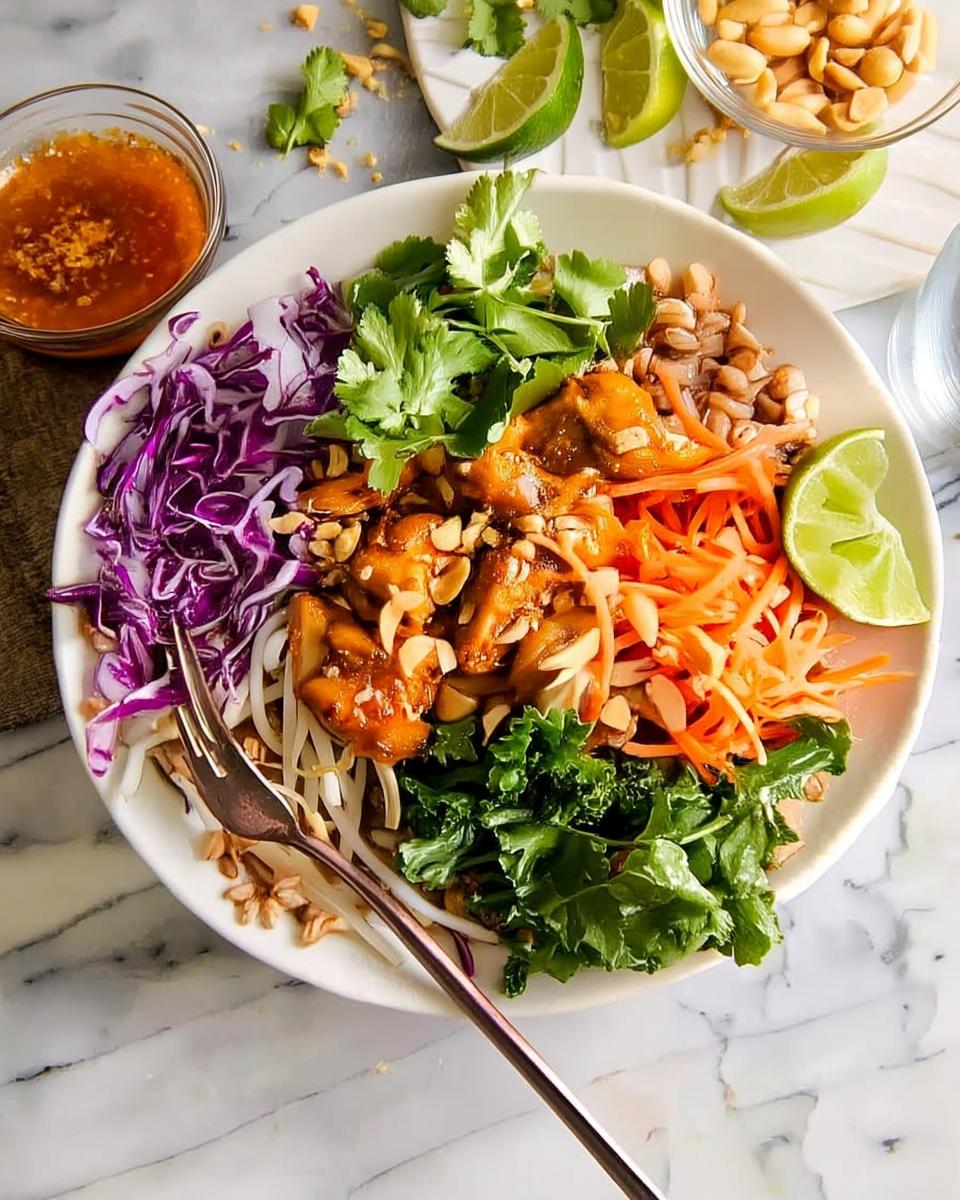
The vibrant flavors of Thai Chicken Buddha Bowls burst with a perfect blend of spicy, tangy, and nutty notes from tender chicken glazed in sambal oelek and lime, layered over nutty brown rice with crisp shredded vegetables. This dish brings the bold essence of Thai cuisine right to your kitchen table. It offers a satisfying crunch from kale and cabbage alongside the subtle sweetness of grated carrots and fresh bean sprouts.
I appreciate how Thai Chicken Buddha Bowls come together in just 40 minutes. They make ideal weeknight dinners when time is short. They reheat beautifully for lunch the next day. They maintain fresh textures and zesty taste. With 35 grams of protein per serving from the chicken and peanut elements, they support your active lifestyle. Plus, they deliver a nutrient-packed meal full of fiber from the veggies.
Why We Love This Recipe
- Bold Thai Flavors: The spicy glaze and creamy peanut sauce create an irresistible balance of heat and creaminess in every bite.
- Quick Assembly: Ready in under an hour with simple stir-fry steps, ideal for fitting into packed schedules.
- Nutrient Powerhouse: Each bowl packs 35 grams of protein alongside 6 grams of fiber from the brown rice and vegetables for sustained energy.
- Customizable Spice: Easily adjust the sambal oelek to suit your heat preference without losing the dish’s vibrant character.
High Protein Thai Chicken Buddha Bowls Recipe
- Prep Time: 20 minutes
- Cook Time: 20 minutes
- Total Time: 40 minutes
- Yield: 4 servings
- Category: Main Dish
- Method: Stir-fry
- Cuisine: Thai
- Diet: Low Fat
Description
High Protein Thai Chicken Buddha Bowls are a flavorful, nutritious meal featuring tender chicken chunks in a spicy glaze, served over brown rice with shredded vegetables, fresh herbs, and a creamy peanut sauce for a balanced Thai-inspired dish.
Ingredients
- 1 pound boneless skinless chicken breast, cut into 1-inch chunks
- 1 cup uncooked brown rice
- 1/4 cup chicken stock
- 1.5 tablespoons sambal oelek
- 1 tablespoon light brown sugar
- 1 tablespoon freshly squeezed lime juice
- 1 tablespoon cornstarch
- 1 tablespoon fish sauce
- 1 tablespoon extra virgin olive oil
- 2 cloves garlic, minced
- 1 shallot, minced
- 1 tablespoon freshly grated ginger
- 2 cups shredded kale
- 1.5 cups shredded purple cabbage
- 1 cup fresh bean sprouts
- 2 whole carrots, peeled and grated
- 1/2 cup fresh cilantro leaves
- 1/4 cup roasted peanuts, chopped
- 3 tablespoons creamy peanut butter
- 2 tablespoons freshly squeezed lime juice (for sauce)
- 1 tablespoon reduced-sodium soy sauce
- 2 teaspoons dark brown sugar
- 2 teaspoons sambal oelek (for sauce)
Instructions
- Prepare the brown rice according to the package instructions and set aside to stay warm.
- Create the spicy peanut dressing by whisking the peanut butter, 2 tablespoons lime juice, soy sauce, dark brown sugar, and 2 teaspoons sambal oelek with a small amount of water until smooth.
- In a small bowl, mix the chicken stock, 1.5 tablespoons sambal oelek, 1 tablespoon brown sugar, and 1 tablespoon lime juice to create the chicken glaze.
- Coat the chicken chunks in a mixture of cornstarch and fish sauce, ensuring the starch is fully absorbed.
- Heat the olive oil in a large skillet over medium heat and sauté the chicken until golden, then add the garlic, shallot, and ginger, cooking for 2 additional minutes.
- Stir the stock glaze into the skillet and simmer for 1 minute until the sauce thickens and coats the chicken pieces.
- Assemble the bowls by layering the rice with kale, cabbage, bean sprouts, and grated carrots.
- Top with the glazed chicken, cilantro, and peanuts, and serve with the peanut sauce drizzled over the top.
Notes
- Adjust the amount of sambal oelek to control the spice level.
- For a gluten-free version, ensure soy sauce and fish sauce are gluten-free.
- Meal can be prepped in advance; store components separately for freshness.
Ingredients to Make Thai Chicken Buddha Bowls
These ingredients combine to deliver an authentic Thai-inspired profile. The chicken and peanut butter provide a robust base that enhances both flavor and nutrition. Good-quality fresh vegetables and herbs elevate the dish’s freshness. Meanwhile, the primary protein sources ensure a hearty meal. Each serving delivers roughly 35 grams of protein from the chicken and peanut elements.
- Boneless skinless chicken breast – Cut into chunks, this lean protein absorbs the spicy glaze for tender, flavorful bites.
- Uncooked brown rice – Forms the wholesome base, adding nutty texture and fiber to the bowls.
- Chicken stock – Used in the glaze, it helps create a silky sauce that coats the chicken evenly.
- Sambal oelek – Brings adjustable heat to both the glaze and peanut sauce for that signature Thai kick.
- Light brown sugar – Balances the spice with subtle sweetness in the glaze.
- Freshly squeezed lime juice – Adds bright tanginess to the glaze and peanut dressing.
- Cornstarch – Coats the chicken for a crisp exterior and helps thicken the sauce.
- Fish sauce – Infuses umami depth into the chicken coating.
- Extra virgin olive oil – Sauté base that promotes even cooking without overpowering flavors.
- Garlic – Minced for aromatic savoriness when sautéed with the chicken.
- Shallot – Minced to provide a mild oniony sharpness in the skillet.
- Freshly grated ginger – Adds warm, zesty notes during the quick sauté.
- Shredded kale – Provides earthy crunch and nutrient density in the bowl layers.
- Shredded purple cabbage – Contributes vibrant color and crisp texture to the vegetable mix.
- Fresh bean sprouts – Offers a fresh, snappy element atop the rice.
- Carrots – Peeled and grated for sweet, colorful shreds that balance the bowl.
- Fresh cilantro leaves – Scattered on top for herbaceous freshness.
- Roasted peanuts – Chopped for nutty crunch and extra protein.
- Creamy peanut butter – Base of the dressing, creating a smooth, rich drizzle.
- Reduced-sodium soy sauce – Seasons the peanut sauce with savory depth.
- Dark brown sugar – Sweetens the peanut dressing lightly.
Each serving of Thai Chicken Buddha Bowls contains 450 calories, 35g protein, 45g carbohydrates, 18g fat, 6g fiber, and 650mg sodium.
How to Make Thai Chicken Buddha Bowls
Step 1: Cook the Brown Rice
Prepare the brown rice following the package directions. It typically involves boiling it in water until tender and fluffy. Then, fluff with a fork and keep it warm in a covered pot. This step ensures a hearty, fiber-rich base that soaks up the flavors from the toppings. Set it aside while you move on to the other components.
Step 2: Make the Peanut Dressing
Whisk together the peanut butter, lime juice, soy sauce, dark brown sugar, and sambal oelek in a bowl. Add a splash of water gradually until the mixture reaches a smooth, drizzleable consistency. It should cling lightly to a spoon. This creamy sauce ties the bowl’s elements with its nutty, spicy profile. Taste and adjust the spice if needed before setting it aside.
Step 3: Prepare the Chicken Glaze
In a small bowl, combine the chicken stock, sambal oelek, brown sugar, and lime juice. Stir until the sugar dissolves. The ingredients blend into a glossy mixture ready for the skillet. This glaze will caramelize slightly during cooking. It coats the chicken with bold Thai flavors. Keep it nearby for easy addition later.
Step 4: Coat and Sauté the Chicken
Mix the cornstarch and fish sauce in a bowl. Then, toss the chicken chunks in this mixture until fully coated. The starch absorbs the liquid for a light batter effect. Heat the olive oil in a large skillet over medium heat. Add the coated chicken and cook until it turns golden brown on all sides. This takes about 5-7 minutes. Then, stir in the minced garlic, shallot, and ginger. Continue to sauté for another 2 minutes until fragrant. The aromatics soften without burning.
Step 5: Finish the Chicken with Glaze
Pour the prepared stock glaze into the skillet with the chicken and aromatics. Stir well to distribute it evenly. Then, simmer everything for about 1 minute. The sauce thickens and clings to the chicken pieces in a shiny coating. This quick reduction intensifies the spicy-sweet taste. It also keeps the chicken tender and juicy. Remove from heat once the glaze reaches the desired consistency.
Step 6: Assemble the Bowls
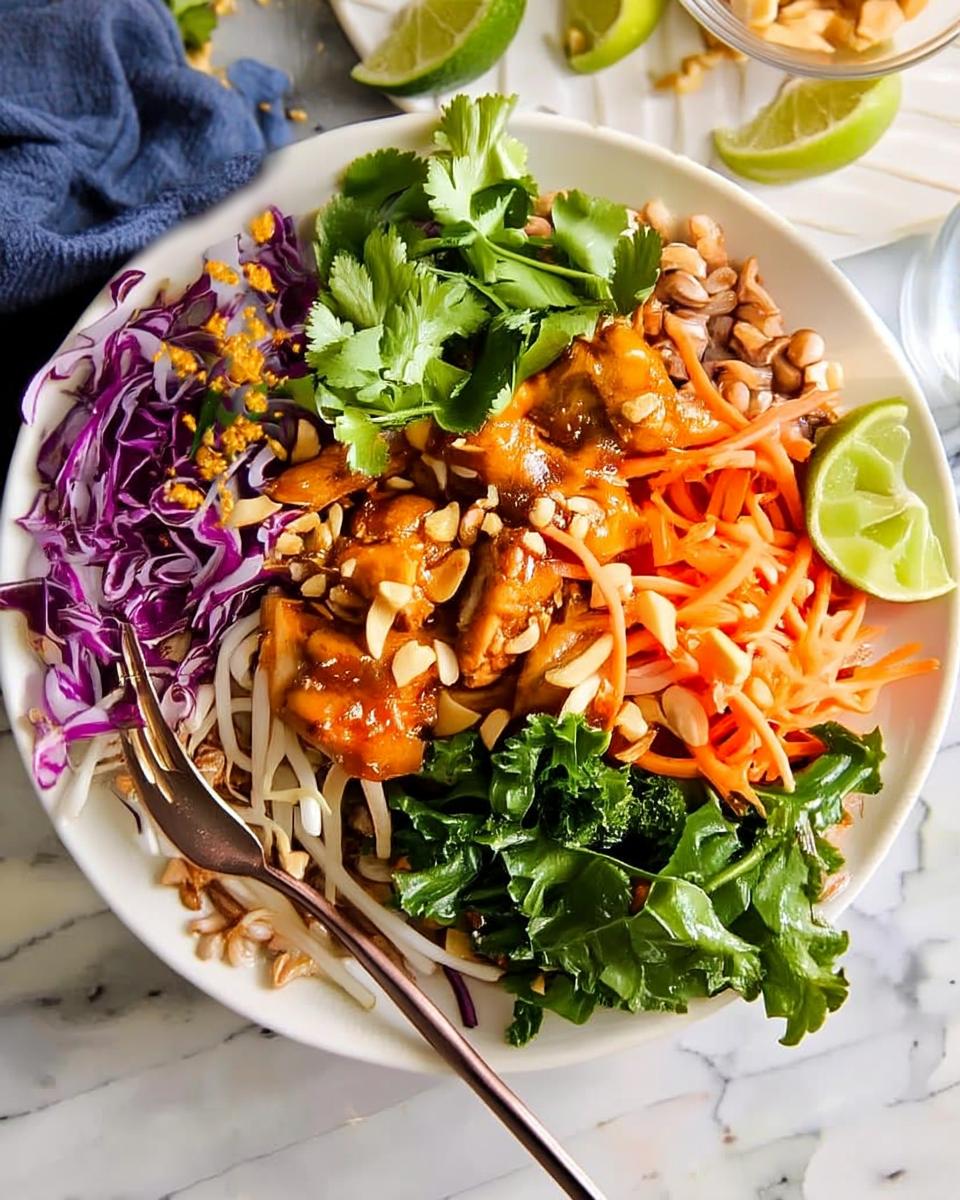
Divide the warm brown rice among four bowls as the base layer. Then, top each with portions of shredded kale, purple cabbage, bean sprouts, and grated carrots. This creates a colorful, crunchy vegetable medley. Spoon the glazed chicken over the veggies. Scatter fresh cilantro leaves and chopped peanuts on top for added texture and freshness. Finally, drizzle the peanut sauce generously across everything. Serve immediately. Enjoy the contrast of warm chicken against cool, crisp elements.
Pro Tips for Success
- Control the Heat: Reduce sambal oelek in both the glaze and sauce if you prefer milder flavors. This allows the lime and ginger to shine more prominently.
- Ensure Gluten-Free: Swap regular soy and fish sauces for certified gluten-free versions. This makes the entire dish suitable for dietary restrictions.
- Boost Protein Intake: Add extra peanuts or a side of edamame. This pushes the protein beyond 35 grams per serving for fitness-focused meals.
- Prep Components Separately: Assemble vegetables and sauces ahead. Store them individually to preserve crunch when building bowls later.
How to Serve Thai Chicken Buddha Bowls
Garnishes
I like to finish Thai Chicken Buddha Bowls with a sprinkle of extra chopped peanuts. They provide satisfying crunch against the tender chicken. Or, add a few lime wedges squeezed right before eating. This brightens the peanut sauce. Thinly sliced green onions add a mild sharpness. They complement the ginger and garlic notes without overwhelming the dish.
Side Dishes
Pair these bowls with a simple cucumber salad dressed in rice vinegar. It offers refreshing coolness that cuts through the spice. Or, try steamed edamame pods for an additional pop of protein and subtle sweetness. A small bowl of chilled mango slices brings a tropical fruitiness. It echoes the lime’s tanginess.
Creative Ways to Present
For a fun twist, I arrange the vegetables in colorful sections around the rice base before adding the chicken. This creates a vibrant rainbow effect that’s appealing for family meals. You could also serve the components deconstructed on a large platter. This lets everyone build their own bowl to customize spice levels and toppings.
Make Ahead and Storage
Storing Leftovers
I store leftover Thai Chicken Buddha Bowls by separating the rice, chicken, and vegetables into individual airtight containers. Do this right after cooling. It keeps everything fresh in the refrigerator for up to 3 days. This method prevents the veggies from wilting under the sauce’s moisture. Always label with the date to track freshness.
Freezing
To freeze, portion the cooked chicken and rice into freezer-safe bags. Exclude the fresh vegetables and herbs since they don’t thaw well. Keep them for up to 1 month. Squeeze out excess air before sealing to avoid freezer burn. Thaw overnight in the fridge when ready to use.
Reheating
I reheat the chicken and rice components together in a skillet over low heat. Add a splash of water to restore moisture. Stir until warmed through in about 5 minutes. Or, use the microwave in short bursts covered with a damp paper towel to prevent drying. For the vegetables, refresh them separately by tossing with a bit of lime juice. The peanut sauce can be gently warmed or served at room temperature. This maintains its creamy texture.