Skip to content


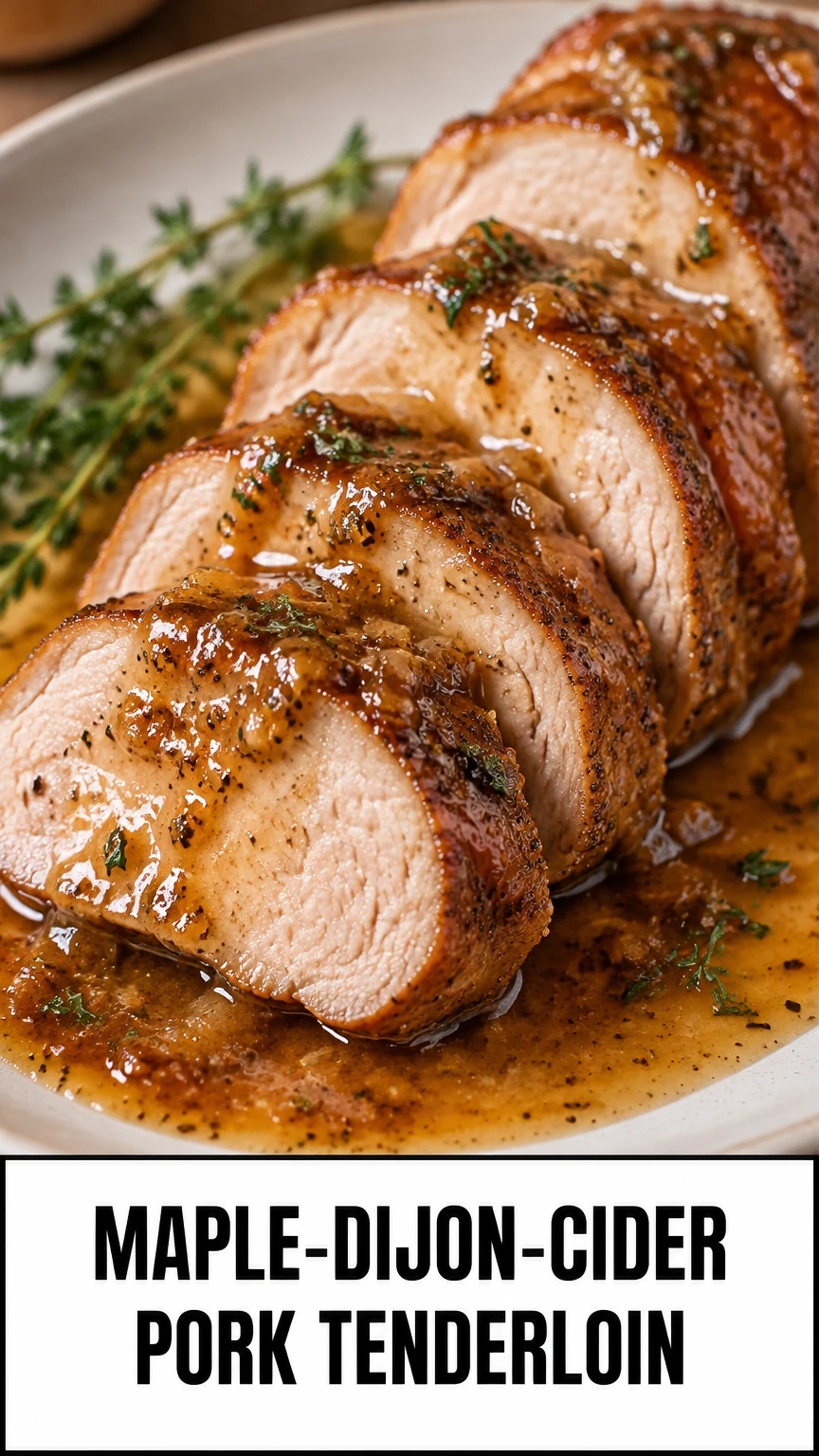
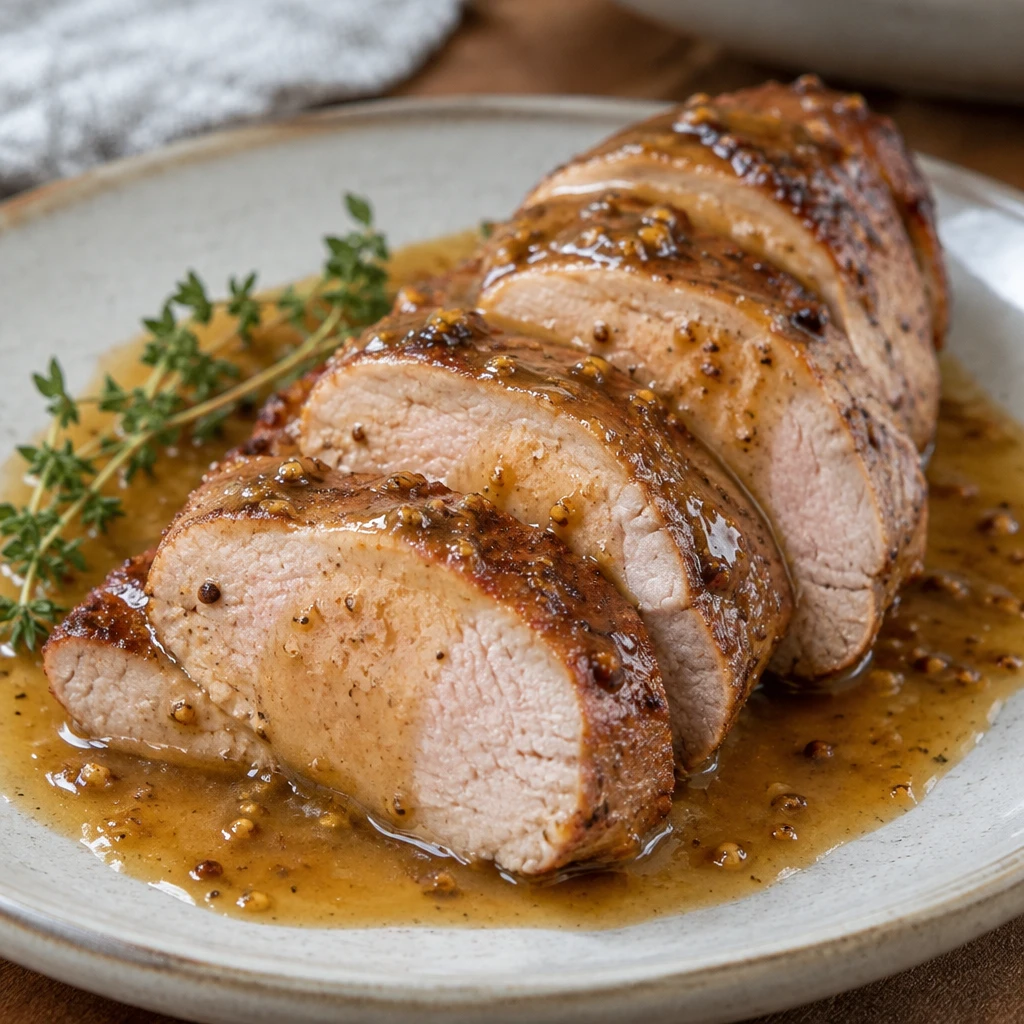
Golden-seared pork tenderloin finishes roasting in the oven while a glossy pan sauce comes together with hard apple cider, pure maple syrup, and Dijon mustard. Check that the cider is certified gluten-free to keep this dinner aligned with the recipe’s gluten-free designation. The sear-and-roast method takes 30 minutes from start to finish and makes four servings.
Why Make Maple-Dijon-Cider Pork Tenderloin?
This dinner brings together a straightforward sear-and-roast method and a pan sauce made in the same skillet. The pork tenderloin is seared until golden, then roasted until it reaches 140°F internally, while hard apple cider, pure maple syrup, and Dijon mustard form a glossy sauce. The full recipe takes 30 minutes and serves four, making the timing and yield clear for dinner planning. Because the recipe is designated gluten-free, check that the hard apple cider is certified gluten-free. Slice the cooked tenderloin and serve it with the sauce for a meal that keeps the pork and its accompanying pan sauce at the center.
Ingredients for Maple-Dijon-Cider Pork Tenderloin
For the Pork
- Pork tenderloin (1¼–1½ pounds): Use tenderloin, not pork loin; they are different cuts, and the recipe is written for tenderloin.
- Vegetable oil: Use a thin layer in the skillet for searing the pork.
- Salt (½ teaspoon) and pepper (½ teaspoon): These season the tenderloin along with the dried herbs and spices.
- Garlic powder (½ teaspoon): Adds seasoning to the outside of the pork before it is seared.
- Dried thyme (½ teaspoon): Season the tenderloin with the thyme before cooking; small browned herb bits can be strained from the sauce later if desired.
For the Pan Sauce
- Hard apple cider (12 ounces): This forms the cider base of the pan sauce. Check that the cider is certified gluten-free.
- Pure maple syrup (1 tablespoon): Use pure maple syrup, not pancake syrup, as directed in the recipe.
- Dijon mustard (2 teaspoons): Whisk it with the cider and maple syrup as the sauce simmers.
- Water (2 tablespoons) and cornstarch (1½ teaspoons): Stir these together to make a slurry, then whisk it into the sauce to thicken it.
Gluten-Free Maple-Dijon-Cider Pork Tenderloin for Dinner
- Prep Time: 10 minutes
- Cook Time: 20 minutes
- Total Time: 30 minutes
- Yield: 4 servings
- Category: Dinner
- Method: Searing and roasting
- Cuisine: American
- Diet: Gluten Free
Description
Gluten-free pork tenderloin seared and roasted until tender, then served with a glossy maple-Dijon hard apple cider pan sauce.
Ingredients
- 1¼–1½ lb pork tenderloin (not pork loin)
- Vegetable oil, for searing
- ½ teaspoon salt
- ½ teaspoon pepper
- ½ teaspoon garlic powder
- ½ teaspoon dried thyme
- 12 oz gluten-free hard apple cider
- 1 tablespoon pure maple syrup (not pancake syrup)
- 2 teaspoons Dijon mustard
- 2 tablespoons water
- 1½ teaspoons cornstarch
Instructions
- Preheat the oven to 450°F. Pat the pork tenderloin dry with paper towels, then season all over with the salt, pepper, garlic powder, and thyme.
- Heat a thin layer of vegetable oil in a large cast-iron skillet over medium-high heat. Sear the pork for 1–2 minutes on each of its four sides, until golden brown. Transfer the skillet to the oven and roast until the pork reaches an internal temperature of 140°F, about 8–15 minutes. Transfer the pork to a cutting board to rest.
- Carefully return the skillet to the stovetop over medium-high heat; the handle will be very hot. Add the hard cider, maple syrup, and Dijon mustard, whisk to combine, and simmer until slightly reduced, about 5 minutes.
- In a small bowl, stir together the water and cornstarch. Whisk the slurry into the skillet and simmer, whisking occasionally, until the sauce is thickened and glossy, about 3–4 minutes. If desired, strain the sauce to remove any burnt herbs or bits.
- Slice the pork and serve with the pan sauce.
Notes
- Use pork tenderloin, not pork loin.
- Check that the hard apple cider is certified gluten-free.
- Use pure maple syrup rather than pancake syrup.
- The skillet handle will be extremely hot after roasting; protect it with a potholder.
- Straining the sauce is optional.
How to Make Maple-Dijon-Cider Pork Tenderloin
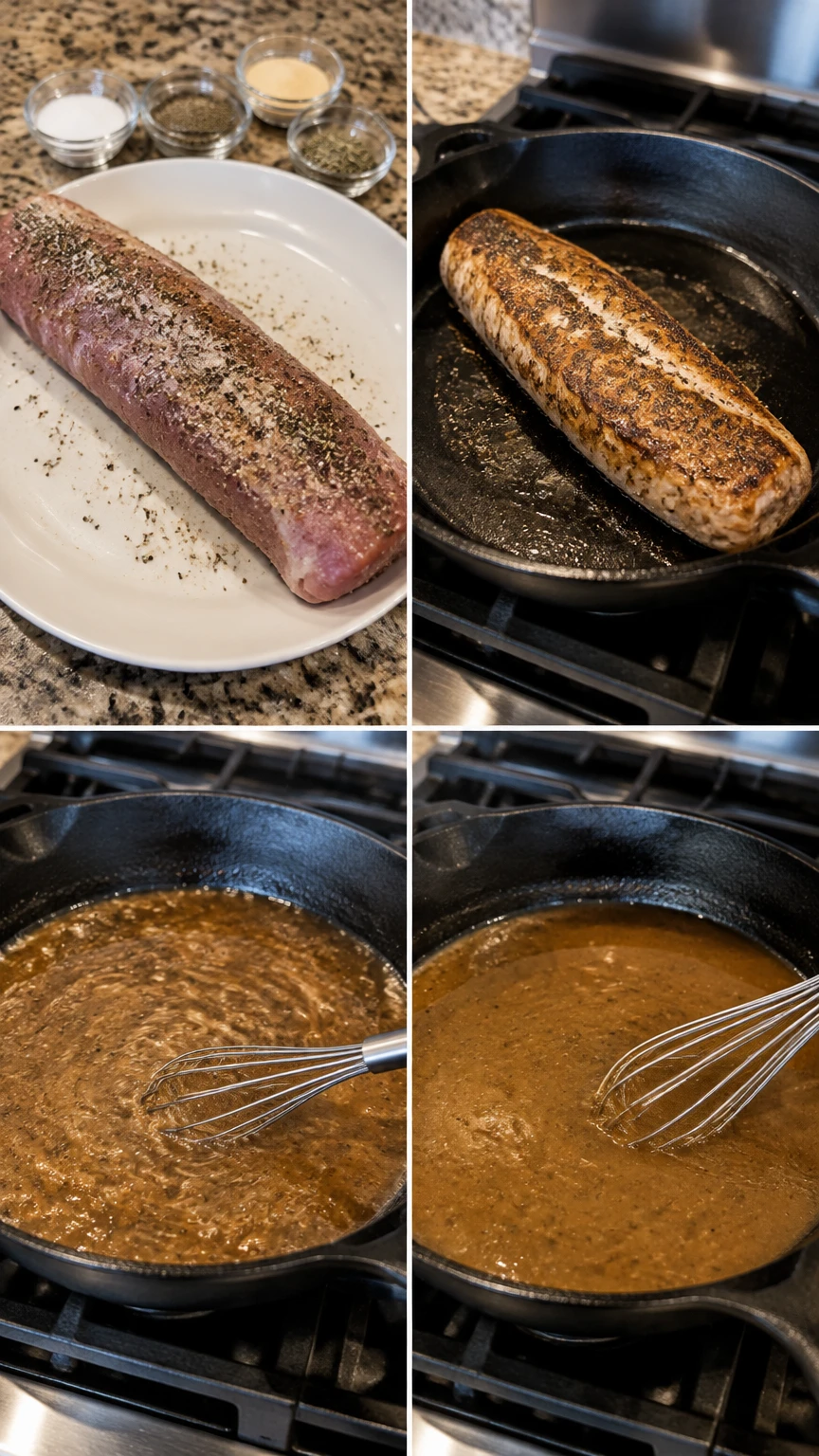
Season the tenderloin, sear it in a hot cast-iron skillet, and roast it until the center reaches 140°F. While the pork rests, use the skillet to make and thicken the hard cider, maple, and Dijon pan sauce. Slice the tenderloin and serve it with the sauce.
Season the Pork
Preheat the oven to 450°F. Pat the pork tenderloin dry all over with paper towels so its surface is ready for seasoning and searing. Season it all over with the salt, pepper, garlic powder, and dried thyme, distributing the seasonings across the outside of the meat.
Sear and Roast the Tenderloin
Heat a thin layer of vegetable oil in a large cast-iron skillet over medium-high heat. Add the seasoned tenderloin and sear each of its four sides for 1–2 minutes, turning it as needed, until the surface is golden brown.
Transfer the skillet to the preheated oven and roast the pork until its center reaches 140°F. This usually takes about 8–15 minutes, but use the internal temperature as the guide because the roast time can vary. When it reaches 140°F, carefully remove the skillet from the oven and transfer the tenderloin to a cutting board to rest. The skillet will be used for the sauce, so keep in mind that its handle will be extremely hot.
Simmer the Cider, Maple, and Dijon Sauce
Protect your hand with a potholder before handling the skillet; its handle will be very hot after roasting. Carefully return the skillet to the stovetop over medium-high heat. Add the hard apple cider, pure maple syrup, and Dijon mustard, then whisk to combine. Simmer the mixture for about 5 minutes, until it has reduced slightly.
Thicken the Pan Sauce
In a small bowl, stir together the water and cornstarch until combined. Whisk this slurry into the skillet, then simmer the sauce for 3–4 minutes, whisking occasionally, until it is thickened and glossy. If you prefer a smoother sauce, strain it to remove any burnt herbs or browned bits; straining is optional.
Slice and Serve
After the pork has rested on the cutting board, slice it and arrange it for serving. Spoon or serve the pan sauce alongside the slices so the tenderloin can be enjoyed with its glossy cider, maple, and Dijon sauce.
Tips for Reliable Results
Choose pork tenderloin, not pork loin. The recipe specifically calls for a 1¼–1½-pound tenderloin, so check the label before cooking rather than relying on the similar names. Using the cut listed helps keep the recipe aligned with its stated roasting instructions.
Take care when moving the skillet between the oven and stovetop. Its handle becomes extremely hot during roasting, and it may still look like a regular room-temperature handle. Use a potholder to protect your hand whenever you need to grip it, including when returning the skillet to the burner to make the sauce.
Straining the pan sauce is optional. If browned herbs or other bits remain in the skillet, strain the sauce to remove them; otherwise, serve it without straining. The recipe allows either approach, so this step can depend on whether you want those bits removed from the finished sauce.
Gluten-Free Ingredient Check
This recipe is designated gluten-free, and the hard apple cider is the specific ingredient to check before cooking. Verify that the cider you use is certified gluten-free rather than assuming every hard cider meets that standard. The recipe’s designation applies to its specified ingredients when this cider check is followed; it does not confirm the status of unverified brands or products. Once you have confirmed the cider, use the listed amount to make the maple-Dijon pan sauce as directed.
Serving the Pork with Its Pan Sauce
Slice the rested pork tenderloin and serve it with the glossy maple-Dijon-cider pan sauce. The sauce is made in the skillet with hard apple cider, pure maple syrup, and Dijon mustard, then thickened until glossy. Serve it alongside the slices or spoon it over the pork so each portion can be enjoyed with the sauce. Keep the sauce with the tenderloin at serving; the recipe’s direction is simply to slice the pork and serve it with the pan sauce.