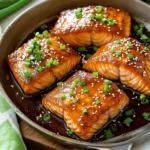
Description
A simple and flavorful recipe for Teriyaki Salmon, featuring salmon fillets marinated and cooked in a homemade teriyaki sauce made with soy sauce, mirin, sake, brown sugar, ginger, and garlic.
Ingredients
- 4 (6 oz) salmon fillets, skin on or off
- 1/2 cup soy sauce (low sodium preferred)
- 1/4 cup mirin
- 2 tablespoons sake (or dry sherry)
- 2 tablespoons brown sugar
- 1 tablespoon fresh ginger, grated
- 2 cloves garlic, minced
- 1 tablespoon cornstarch (mixed with 1 tbsp cold water for slurry)
- 1 tablespoon sesame oil (for cooking)
- Sesame seeds and chopped green onions for garnish (optional)
Instructions
- In a medium bowl, whisk together soy sauce, mirin, sake, brown sugar, grated ginger, and minced garlic. This is your teriyaki marinade/sauce.
- Place salmon fillets in a shallow dish and pour about half of the teriyaki sauce over them. Marinate in the refrigerator for 15-30 minutes (do not marinate for too long as the acid can cook the fish). Reserve the other half of the sauce.
- Heat sesame oil in a large non-stick skillet over medium-high heat.
- Remove salmon from marinade (discard used marinade) and pat dry with paper towels. Sear salmon skin-side down (if applicable) for 4-5 minutes until crispy. Flip and cook for another 3-5 minutes, or until cooked through and flakes easily with a fork (internal temperature 145°F/63°C). Set cooked salmon aside.
- While salmon cooks, pour the reserved teriyaki sauce into a small saucepan. Bring to a simmer over medium heat. Whisk in the cornstarch slurry and cook, stirring constantly, until the sauce thickens to your desired consistency.
- Plate the cooked salmon and generously spoon the thickened teriyaki sauce over each fillet.
- Garnish with sesame seeds and chopped green onions, if desired. Serve immediately with rice and steamed vegetables.
Notes
- Use low-sodium soy sauce for better control over the saltiness.
- Ensure the internal temperature of the salmon reaches 145°F (63°C) for safe consumption.
- Do not over-marinate the salmon, as the acidity can start to ‘cook’ the fish, leading to a mushy texture.