 Print
Print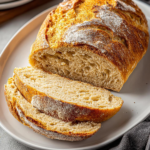
Description
A hearty traditional German bread made with a blend of bread flour and whole wheat flour, infused with aromatic spices like coriander, fennel, and caraway for authentic flavor.
Ingredients
- 550 g (approximately 4 1/2 cups) bread flour
- 200 g (approximately 1 1/2 cups) 100% whole grain whole wheat flour
- 1 1/2 packets (about 2 1/4 teaspoons) rapid-rise dry yeast
- 3 tablespoons diastatic malt powder (optional, for improved crust and crumb)
- 3 tablespoons sunflower oil
- 2 teaspoons salt
- 2 teaspoons sugar
- 1/2 teaspoon ground coriander
- 1/2 teaspoon ground fennel
- 1/2 teaspoon ground caraway
- 470 ml (approximately 2 cups) lukewarm water
Instructions
- In a spacious mixing bowl, combine the bread flour, whole wheat flour, rapid-rise dry yeast, diastatic malt powder (if using), salt, sugar, ground coriander, ground fennel, and ground caraway. Whisk these dry ingredients together thoroughly.
- Create a well in the center of the dry ingredients and pour in the sunflower oil and lukewarm water.
- Mix all ingredients together by hand or with a stand mixer fitted with a dough hook until a shaggy dough forms. Continue to knead for 8-10 minutes until the dough is smooth, elastic, and no longer overly sticky.
- Form the dough into a ball and place it in a lightly oiled bowl, turning to coat. Cover the bowl with plastic wrap or a damp cloth and let it rise in a warm place for 1 to 1.5 hours, or until it has doubled in size.
- Gently punch down the risen dough to release the air. Shape it into a round or oval loaf, ensuring a taut surface.
- Place the shaped loaf onto a parchment-lined baking sheet or into a floured proofing basket. Cover again and allow to proof for another 30-45 minutes, or until noticeably puffy.
- Preheat your oven to 425°F (220°C). If using a Dutch oven, preheat it with the lid on for at least 30 minutes.
- Score the top of the risen loaf with a sharp knife or razor blade. If baking in a Dutch oven, carefully transfer the loaf into the hot Dutch oven. If on a baking sheet, place directly into the oven.
- Bake for 20-25 minutes with the lid on (if using a Dutch oven) or until a good crust has formed. Then, remove the lid (or continue baking uncovered) and reduce the temperature to 375°F (190°C). Continue baking for an additional 20-30 minutes, or until the crust is deeply golden brown and the internal temperature reaches 200-210°F (93-99°C).
- Allow the bread to cool completely on a wire rack before slicing and serving. This allows the internal structure to set.
Notes
- Diastatic malt powder is optional but recommended for a better crust and crumb structure.
- The bread can be baked in a Dutch oven for a steamier environment and crispier crust, or on a baking sheet.
- Ensure the water is lukewarm (around 100-110°F or 38-43°C) to activate the yeast without killing it.
- Cooling completely is essential to prevent a gummy texture inside the loaf.